A self-serve fashion image tool now also sells the art directors who work it
Launched to 4,000 users as a self-serve fashion image tool; after its $1.2M seed, it sells its art directors too.
The product
Modelia turns a photo of a garment – laid flat, on a mannequin or on a person – into a picture of a model wearing it, in a chosen setting, and into short video. It sells to fashion brands and retailers for their shop pages and campaigns, as a web studio, a Shopify app and an API. It is Spanish, run from Madrid through a Delaware company, Modelia Inc., founded in 2024 by Iván Rodríguez, a co-founder of the parking-booking company Parclick, sold in 2019, and René Haas, a Danish CTO with a PhD in generative AI and computer vision. Desigual, AWWG, the group behind Pepe Jeans and Hackett, and Fútbol Emotion are named clients.
How it works
A user uploads a garment image, picks the model's age, gender and ethnicity, a background and any pieces to wear with it, and gets four images back. From one result the tools make other poses, swap the face or the background, change a colour, add a hat, bag, shoes or glasses, or animate it from a written prompt. Workflows, introduced on the blog in April 2026, chains these steps into a pipeline a team can run over a whole catalogue, and the API exposes the same jobs at the same price per image.
Beside the software there is now a menu called Services: an agency whose art directors, stylists and editors produce the images for a brand, and training and setup for teams that want to do it themselves.
Business model
The tool is sold in credits. A free plan gives 20 a month with a watermark; one-off packs start at $12 for 50; subscriptions run from $35 a month for 250 credits to $300 for 3,000, with unused credits carried over. The company prices an image at about $0.35 and a video at $3 against what it puts at $35 to $80 for a conventional e-commerce shot.
The services are priced like an agency: a single project from $850, or a retainer with a three-month minimum and a project manager. Credits suit a shop owner who needs a few dozen images now and then; the retainer suits a brand with collections to shoot every season. The United States brings in 44% of sales and Europe 27%.
The spike
Modelia started with a larger promise than the one it now sells. In June 2024 Rodríguez described it to IESE as a way to lift conversion through "hyper-personalization": the same garment shown on a model matched to each audience's age, ethnicity and hairstyle, because "product photos stayed the same for everyone". What reached the market first was narrower. The January 2025 posts on Hacker News offered a toolkit that turns flat and mannequin shots into model photos, and the official launch in October 2025 sold it as a way to do without "expensive and slow" photo shoots. Personalisation had moved to the future tense: "radical personalisation is the next step," Rodríguez told FashionUnited then.
The same launch carried the second change. The company had more than 4,000 active users, and it admitted that getting the picture they wanted was not always easy. Getting the right prompt "can be complicated when you are looking for very specific photos," Rodríguez said, so Modelia kept a team of visual specialists to help users generate exactly what they needed – "it may seem contradictory in software that works like Photoshop, but it is key." By June 2026 that help had become products with prices: an agency whose people "use Modelia every day to produce for brands, and every project makes the platform better", and training delivered by "the same people who build and use Modelia every day".
Modelia never calls this a change of course. The funding release put the reason in terms of its customers: small brands "cannot operationalise AI on their own, and large ones cannot do it without governance and workflows." Our reading is plainer. The software could make the image; most buyers lacked the eye to direct it. Modelia chose to sell that eye as well, on its own tool, rather than wait for the tool to need none.
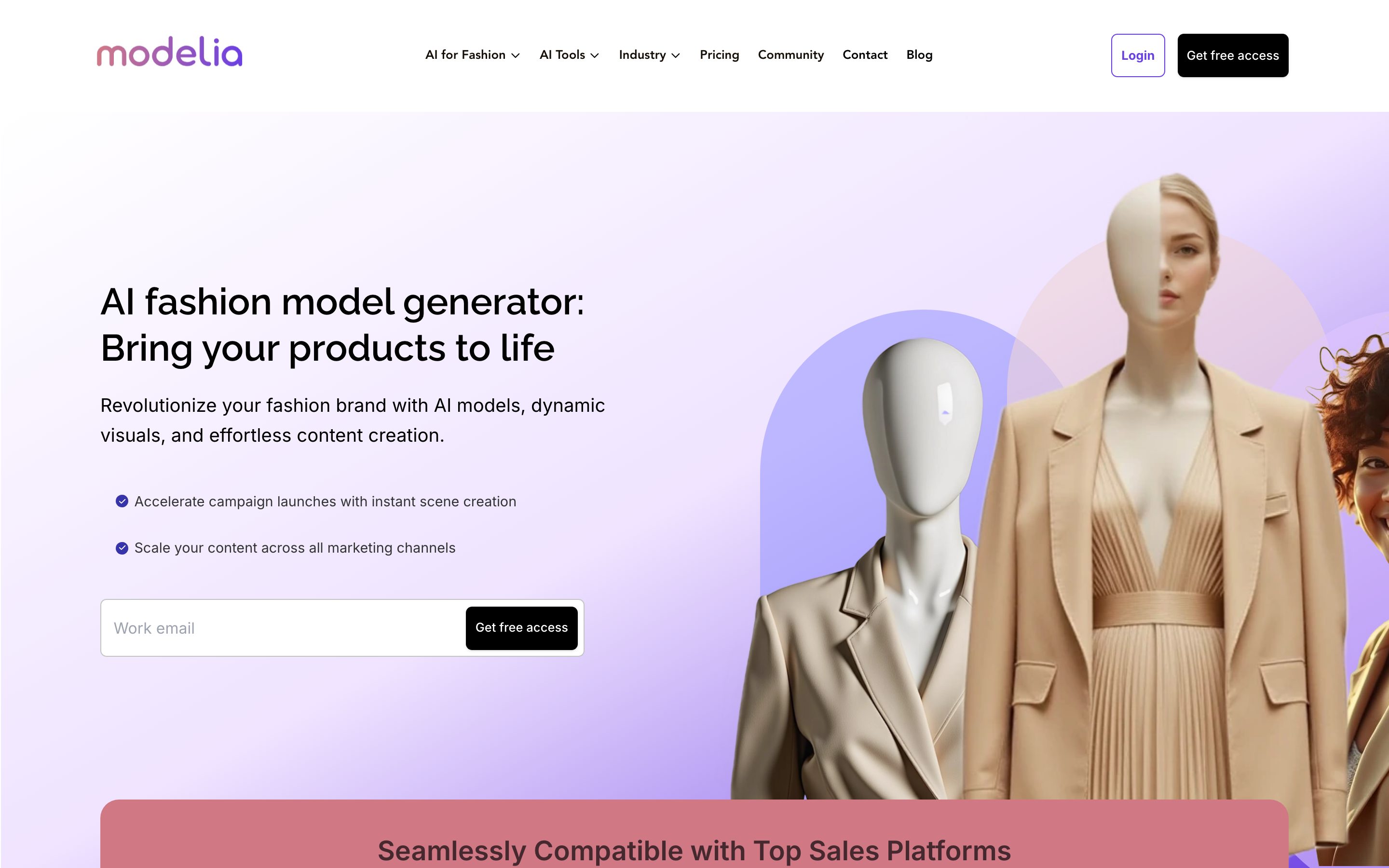
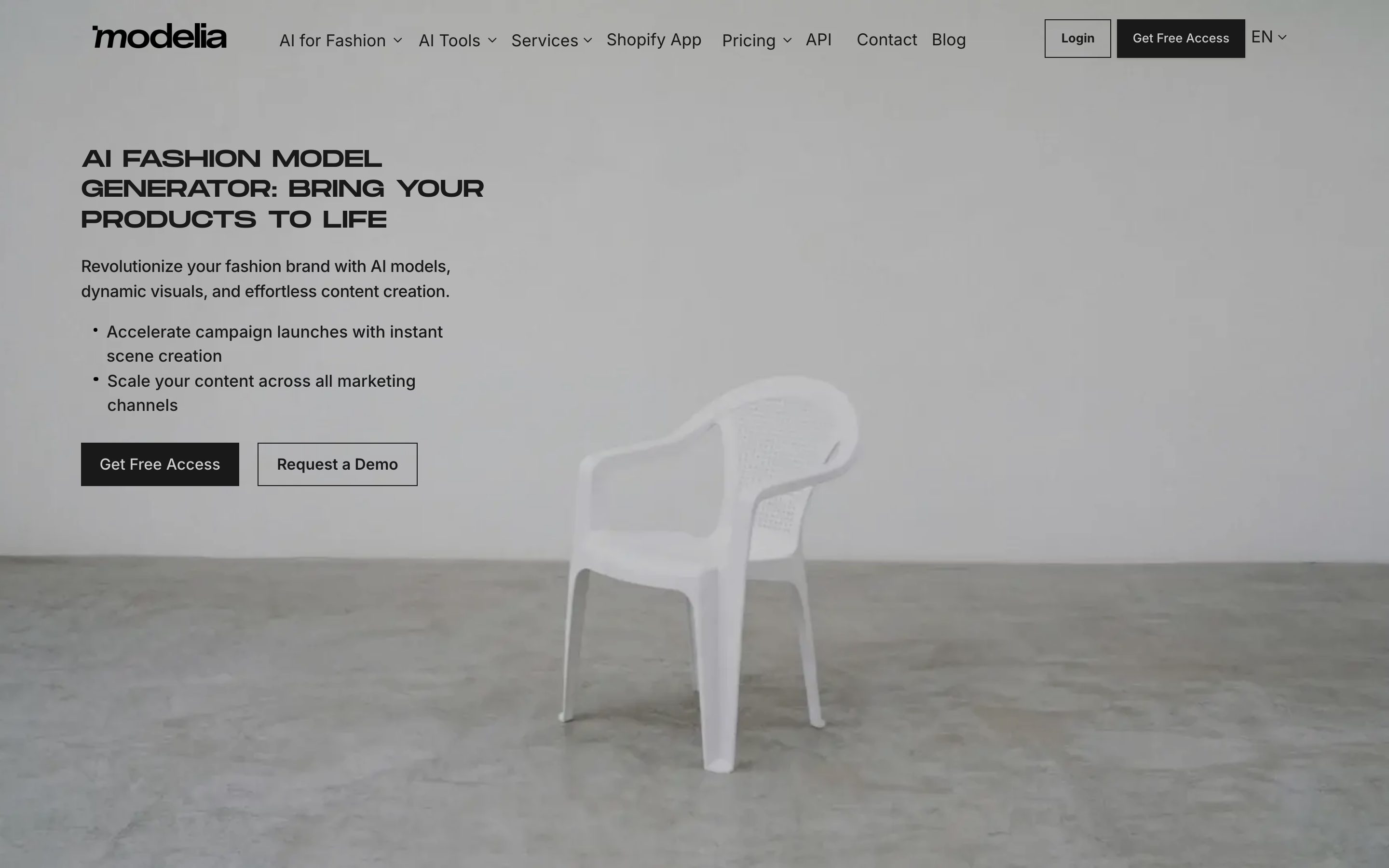
The traces are few, as they are for any company this young. The Form D, filed on 26 May 2026, records the seed's first sale on 11 May, three weeks before the $1.2M round was announced on 2 June; it reports more money sold than the announcement, and neither the filing nor the release explains the difference. The Services pages first appear in the archive on 7 June.
Why it matters
Before Modelia, a fashion brand had a choice of two sources for these pictures. It could book a shoot – photographer, model, stylist, studio, retoucher – and wait weeks. Or it could use a general image model, which anyone can now prompt, as IED Milano's students do with ChatGPT and Gemini alongside Modelia. Other fashion-specific generators sit between the two, and Modelia's own site keeps comparison pages against Botika, Fashn.ai, Lalaland.ai and others.
Both cheaper routes hand the brand the directing: writing the prompt, judging which of four images keeps the garment true, doing it again for every colourway and every channel. Rodríguez said as much in October 2025, and Next Tier's Patricia Pastor, who led the round, put it the same way: brands "do not want to choose between AI models, they want production results."
Every number here comes from Modelia itself, and there are not many. It reports sales up 15% a month in the run-up to the seed, more than 300,000 SKUs processed in six months for brands in 26 countries, and a 98% client retention rate that carries no date. None of them splits the software from the services, so there is no way yet to see how many customers stopped directing the tool themselves and paid Modelia's people to do it. Cargofy, which sold its dispatchers' work before turning it into software fleets run on their own, travelled the same road in the other direction.
The playbook
When a generative model can make what a trade used to commission, here a catalogue shot with model, stylist and studio, sell the finished output by the unit to businesses that need it in bulk, priced against the commission rather than the compute. The same opening sits wherever buyers order hundreds of near-identical pieces a season from freelancers. Modelia prices an image at about $0.35 against $35 to $80 for a conventional shot. Any general model anyone can prompt sets the floor.
The lesson
Modelia launched as a tool anyone could sign up for, and found that many who did could not get the result they came for. Rather than wait for the software to become easy enough, it hired the skill its buyers lacked – art directors, stylists, editors – and sold their work as an agency and as training, done on Modelia itself. Its own staff use the tool every day, and, as the agency page puts it, every project makes the platform better.
When the people who pay for your tool lack the skill to get the result out of it, sell them the result too, made by your own staff with the same tool. The service collects from buyers who would otherwise leave, and the staff doing it find every weakness before a customer does.
The price is a second business with worse arithmetic: revenue that grows only as fast as the team, and a new rival for the agencies the homepage still counts among its main users. Nothing public yet says how large the service side is, so the choice can still turn out to be a detour.
Which of your paying users bought your tool for a result they still cannot get out of it alone, and would they pay your own people to produce it?
Where else it could work · our reasoning, not a finding
Bookkeeping software for small firms
Owners buy the ledger and still hand a shoebox of receipts to someone; staff closing the books inside the vendor's own software earn from the customers the product alone would lose.
Industrial 3D printers
A buyer who needs a few parts a quarter rarely keeps an operator who can tune the machine; the maker's own print bureau sells the parts and runs its printers harder than any customer.
Agricultural drones
Spraying takes a licence and a few days a year, so most farms will not train a pilot; the manufacturer's crews fly its own drones by the hectare and learn where the machine fails first.
Track record
Modelia · modelia.ai ↗
- IESE interview with Iván Rodríguez: Modelia.ai pitched as hyper-personalisation, the same garment shown on models tailored to each audience to lift conversion ↗
- Earliest archived homepage, reached from an AI tools directory; the page is a script shell the archive cannot draw ↗
- Hacker News post: “we have just launched a series of tools” – clone a garment, sketch to image, change colour, change background, captions ↗
- Homepage: “AI fashion model generator: Bring your products to life”, with a work-email form for free access ↗
- Shopify app launched, from free to $85 a month ↗
- Official platform launch in FashionUnited: more than 4,000 active users in 20 countries, over 20 tools, and a team of visual specialists helping users get the images they need ↗
- Official partner of Mercedes-Benz Fashion Week Madrid, powering the EGO showroom ↗
- Form D for the seed round: first sale 11 May 2026, equity and options, six investors; the filed amount is higher than the one announced ↗
- Seed round of $1.2M announced, led by Next Tier with existing shareholders Rapid Scale and Archipelago Next and fashion-industry angels; the €1.03M in most headlines is a conversion ↗
- First archived captures of the Services pages: a creative agency from $850 a project, and training and brand setup by the team that uses the tool ↗
- Homepage: the same headline, with Services, Shopify App and API in the menu and a demo button beside free access ↗